

Len Pick Trust Owl Project
Welcome to the Len Pick Trust's owl project. A number of years ago we worked with local technical colleges and local farmers to build two owl towers on land around Bourne. These structures have proven to be very successful, and during the nesting season we run a blog and live video feed from one of the towers, which you can find below.
This is a static image from the owl tower, which is updated every 10 minutes. Refresh your browser page to see the latest image!
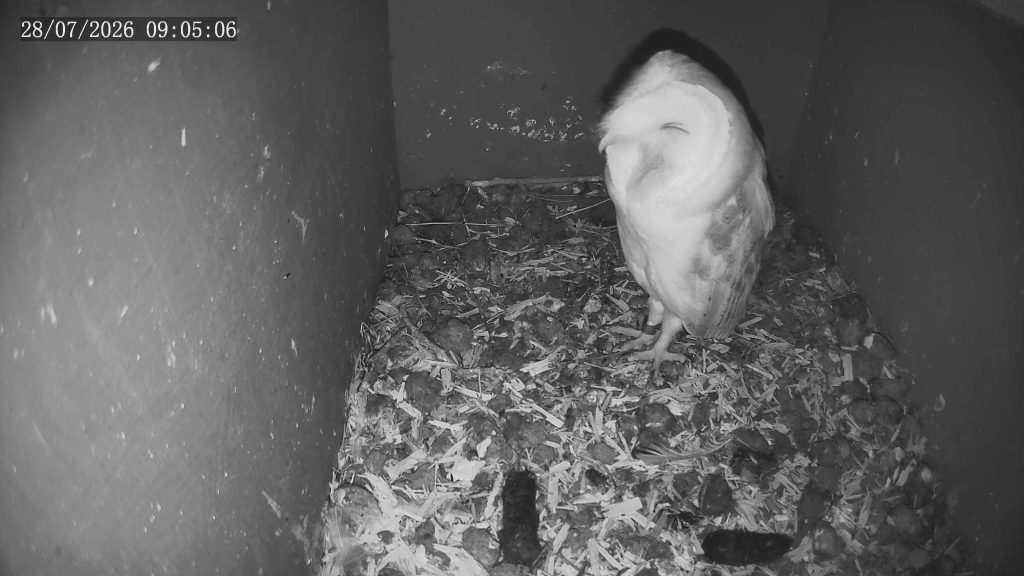
he youngsters are rarely seen on camera now as they are free flying.
They are still dependant on their parents for food but they will gradually learn to hunt for themselves.
Then they will leave their natal territory for pastures new next month but the adults will remain around the tower to maintain their bond for next season.
The owl in today’s picture is about to cast a pellet of undigested fur and bones.
It has been a fairly straightforward breeding season this summer because of the settled weather.
Good luck little ones. We trust you will soon find a territory of your own with lots of delicious voles and mice!
Thank you to all our dedicated viewers from all corners of the globe. We hope to see you in 2027.
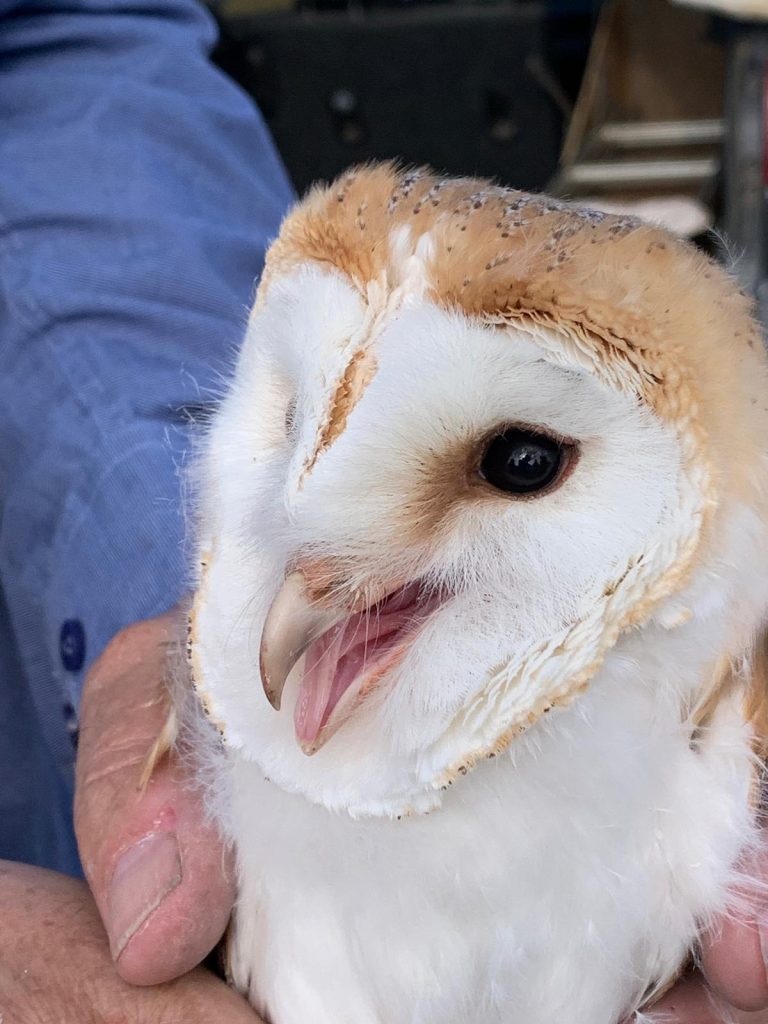
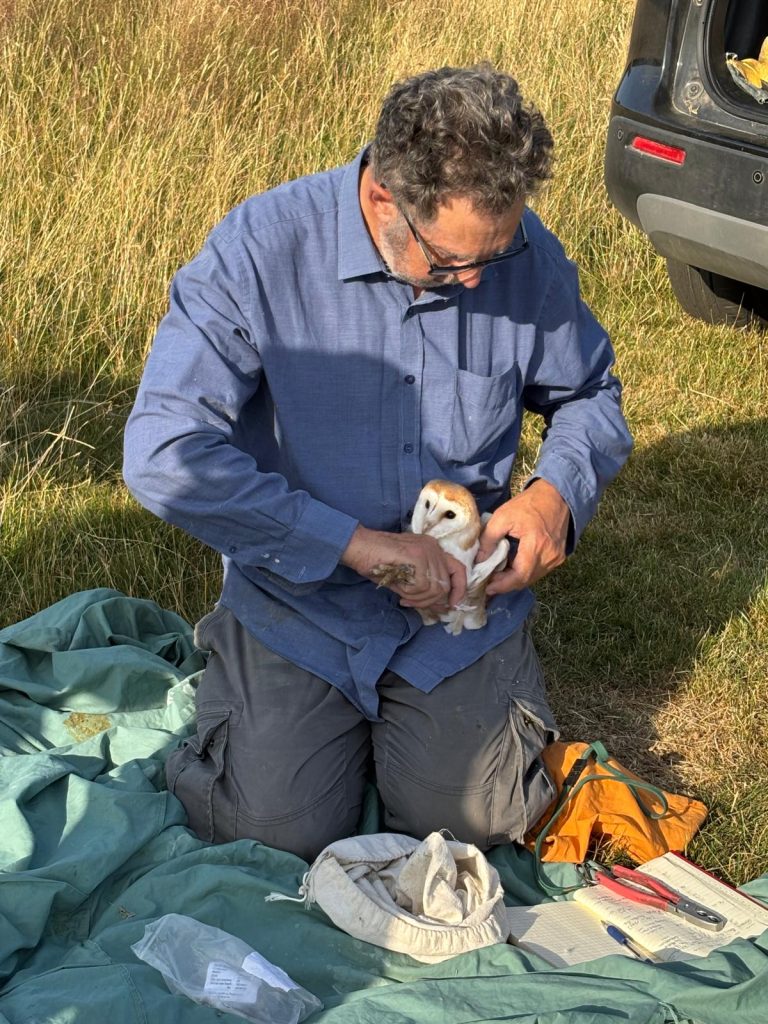
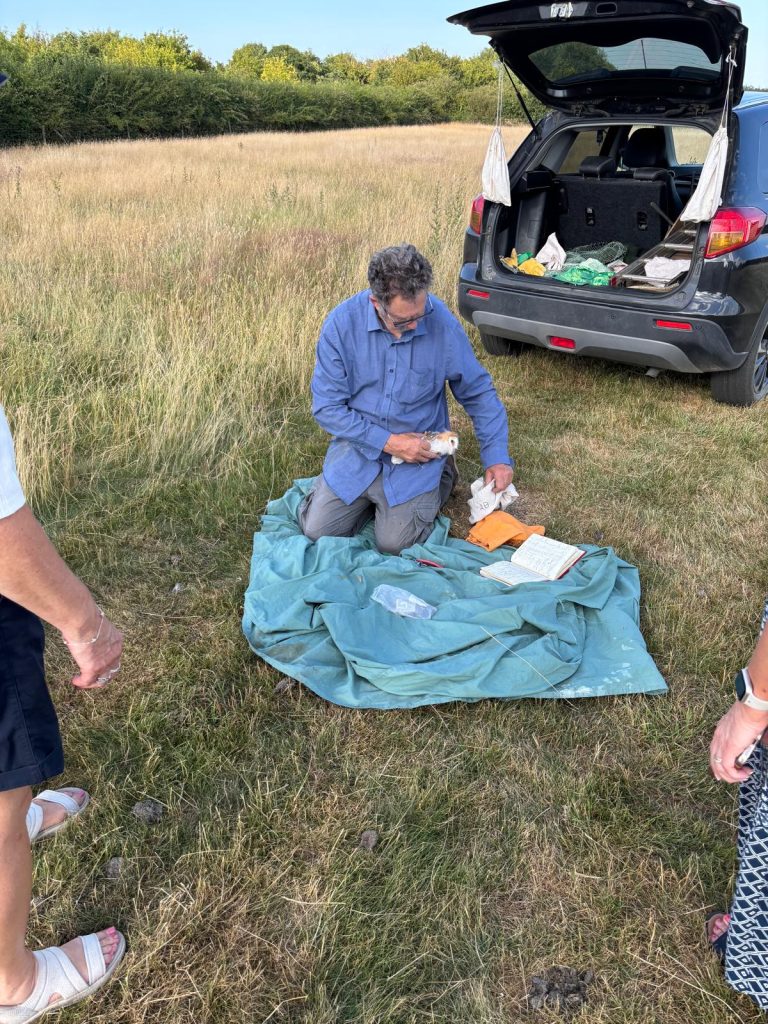
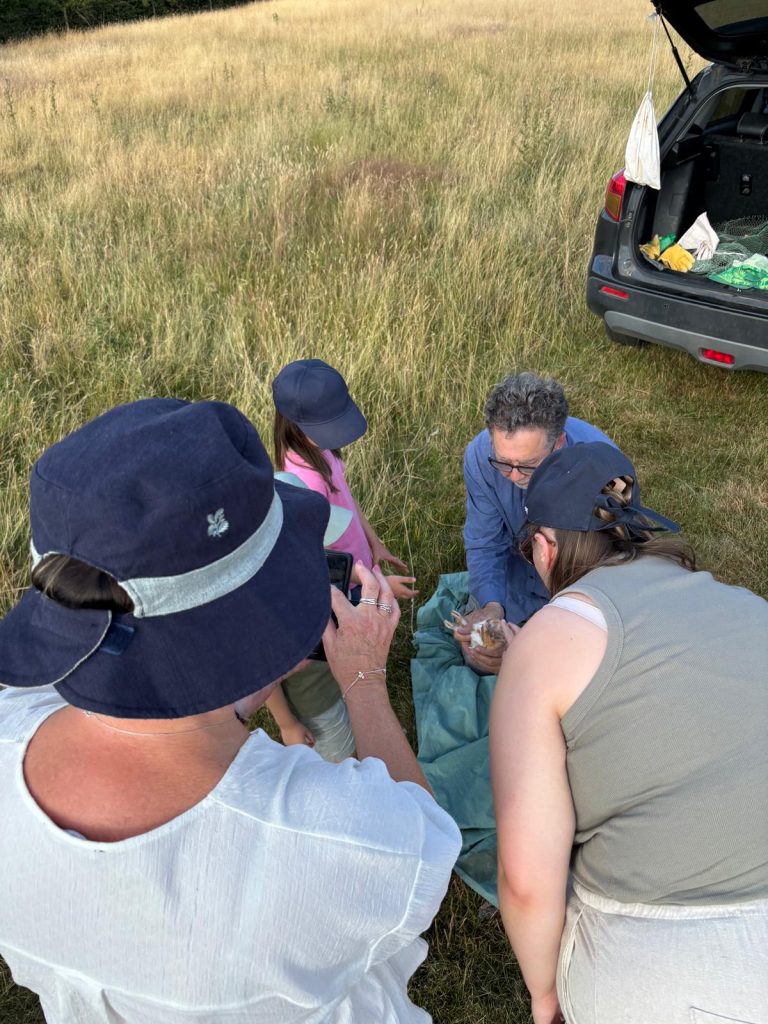
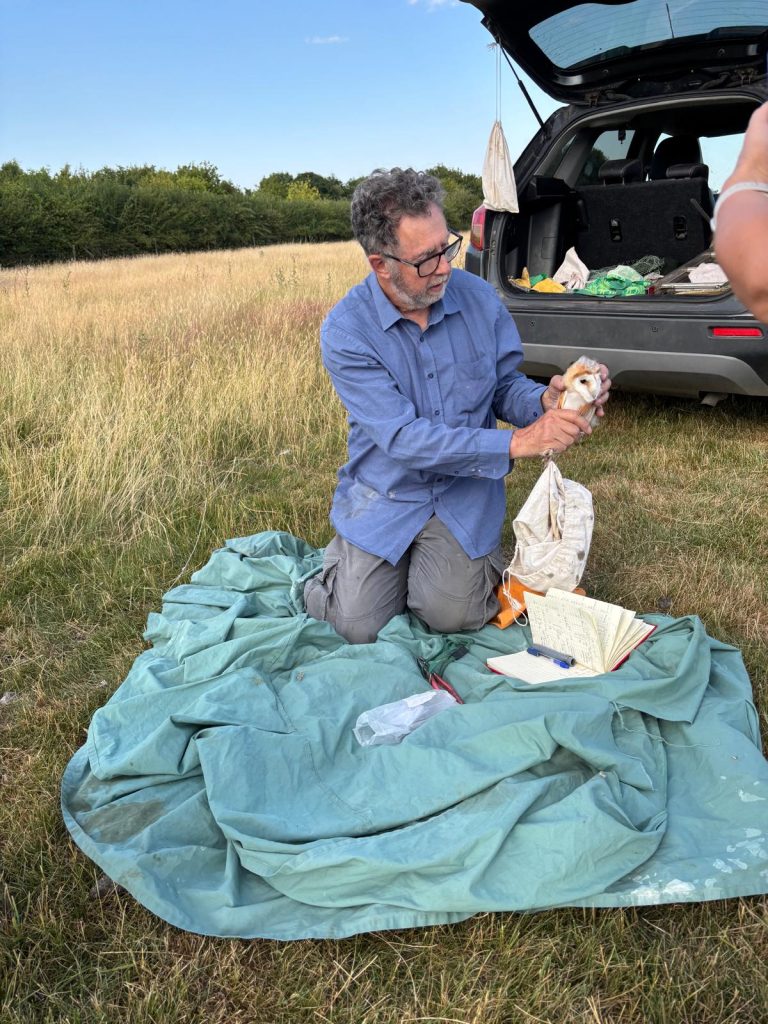
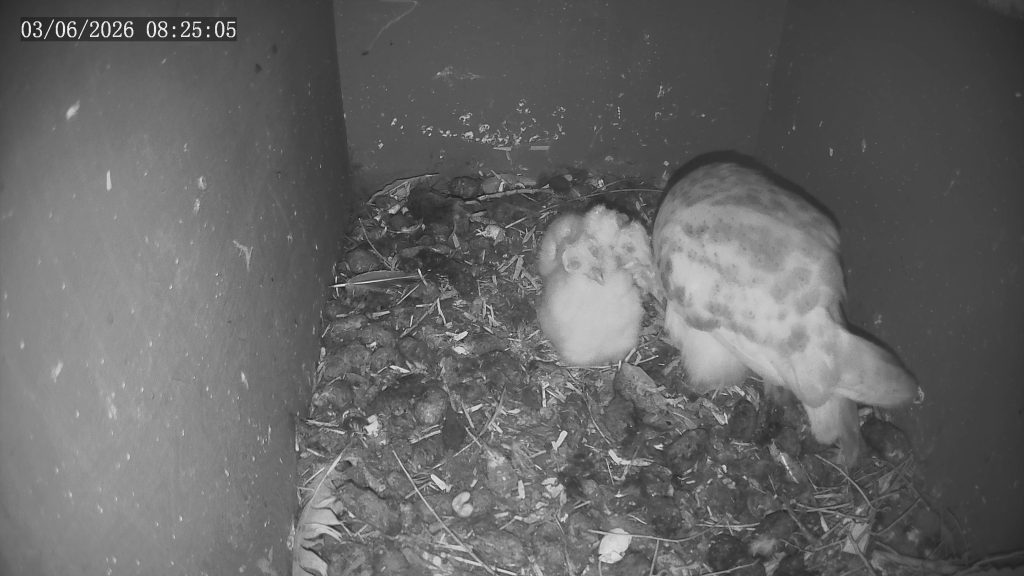
Several trustees from the Len Pick Trust and their families were present to see the three owlets ringed under licence last night.
They were sexed as two males and one female.
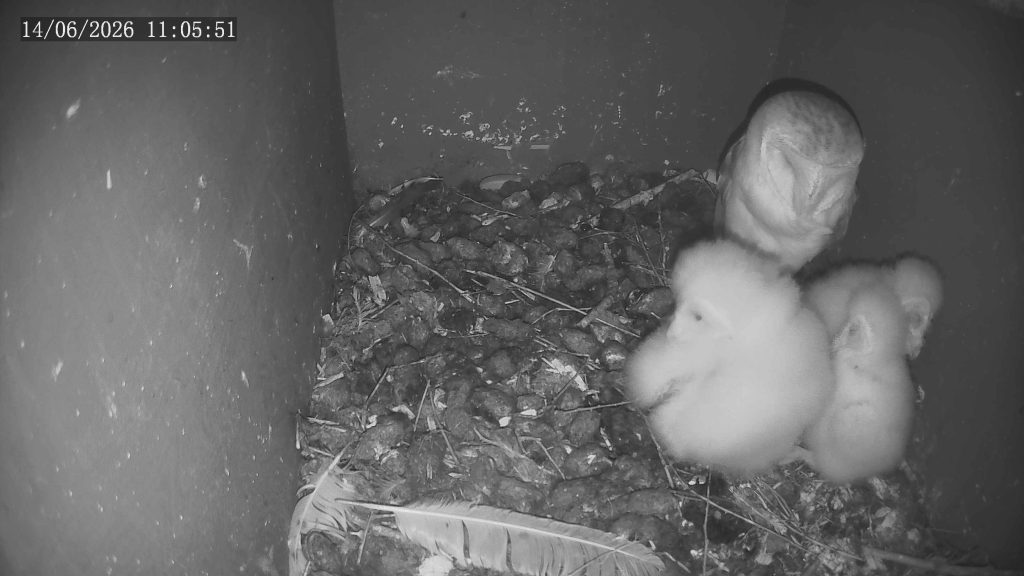
The chicks are exactly seven weeks old and in the evening they are mobile enough to go down the tunnel to the entrance as they know this is where the food is delivered.
They return to sleep in the box during the daytime.
Regular viewers will have noticed our camera has been unreliable this season but it is working now.
The website has already had nearly ten thousand hits in 2026 so far.
It is popular in countries all around the world.
It won’t be long before the owlets are taking their first tentative flights but they will return to the tower during the day.
We must make the most of these views as they will soon be gone.
The weather is improving and our barn owl chicks are looking healthy.
They don’t need brooding now and so the female can help with the hunting.
We can expect to see just the chicks in the nest through the night as the adults will be busy.
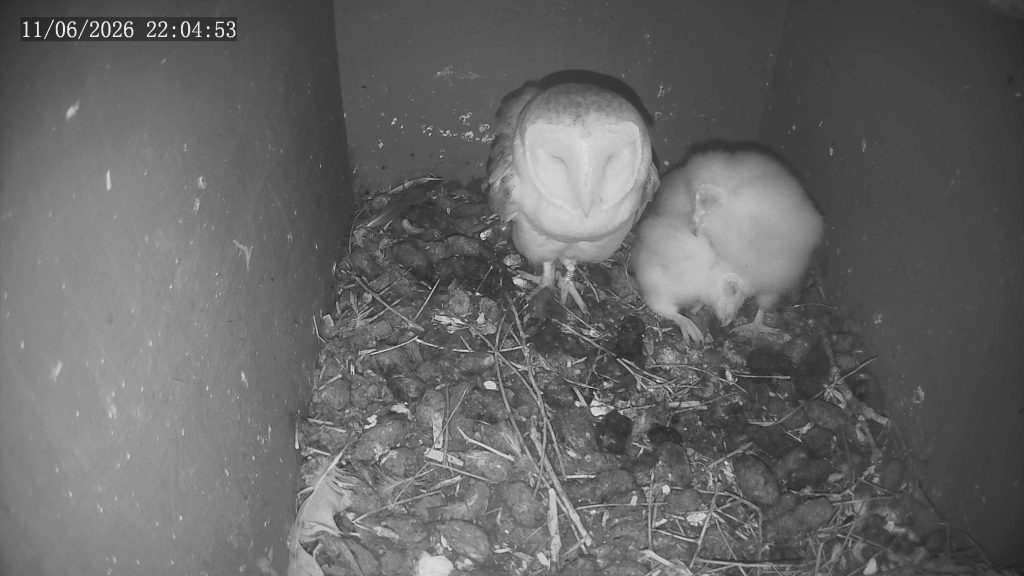
The owlets are three weeks old and are doing well despite the recent heavy rain.
Much of this fell during the day so the male has been able to hunt through the night.
The chicks won’t need brooding from next week so the female will begin to share the hunting.
It is two weeks since our oldest chick hatched and the brood of four are thriving thanks to the good weather.
This week a short tailed vole was brought in by the male which is a really good sign as only field mice have been seen in the nest chamber so far.
Voles form most of the diet of barn owls in the UK and they have been scare in the East Midlands so far this year because of the late winter weather.
However, in these optimum conditions, they can soon increase their numbers very rapidly and it appears this will now happen in time for our growing family to benefit.
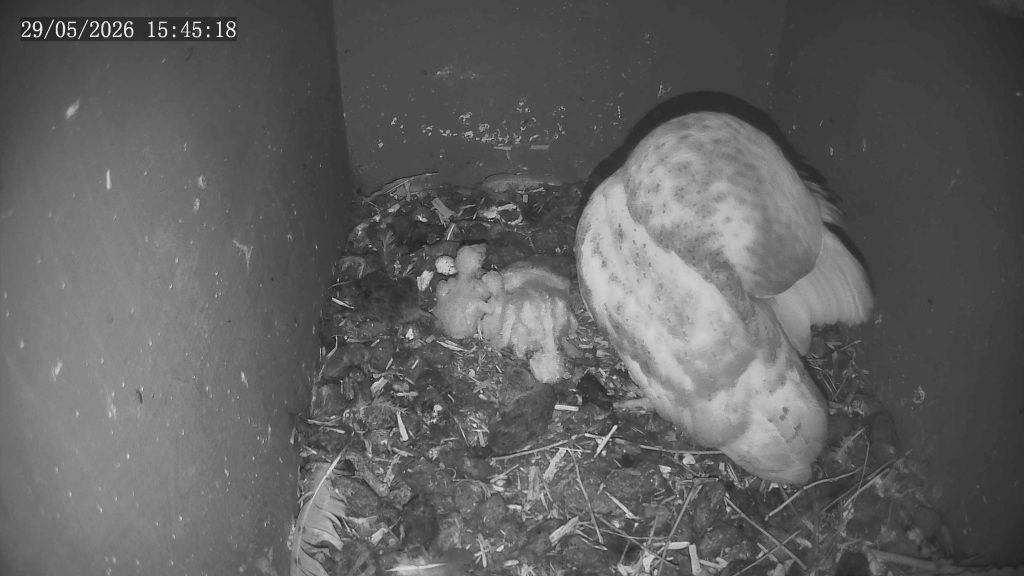
Exciting news from the owl tower today.
Our barn owls have a brood of four chicks.
They are feeling the heat ((aren’t we all?) but they are coping well.
The male is bringing in lots of field mice.
The female won’t hunt until the chicks are two weeks old.
It is possible all four chicks will fledge in two months time.
The main factor will be the weather. If it gets very windy, with overnight rain, the adults will struggle to hunt and the brood will deplete.
This is quite natural .
The older chicks will then get the most food. That’s why the eggs hatch at two and a half day intervals.
Let’s hope they all make it.
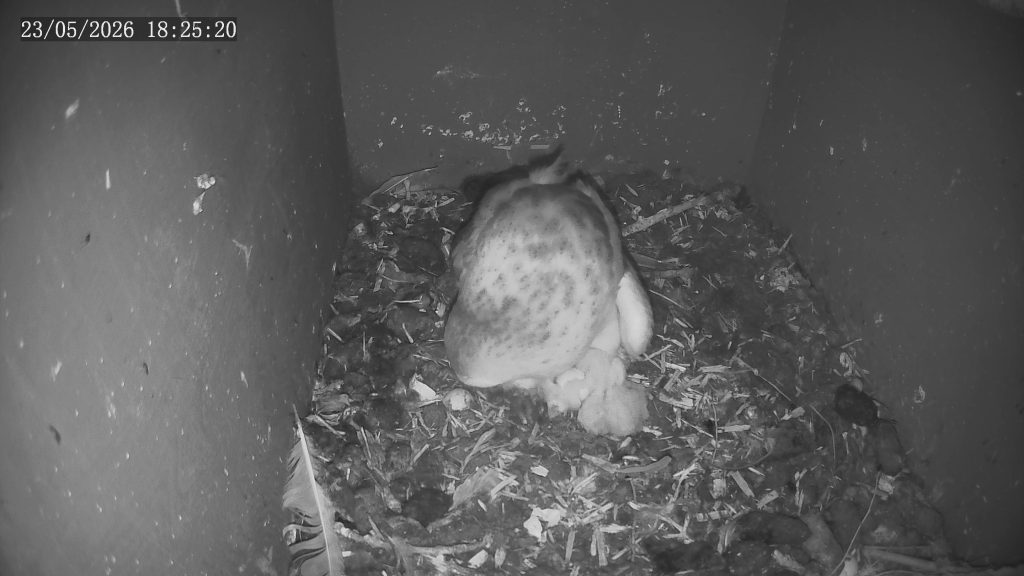
It was very hot in the owl tower today so the female barn owl didn’t need to brood the chicks.
This gave us a rare opportunity to see the three tiny owlets.
There is still plenty of time for the fourth egg to hatch.
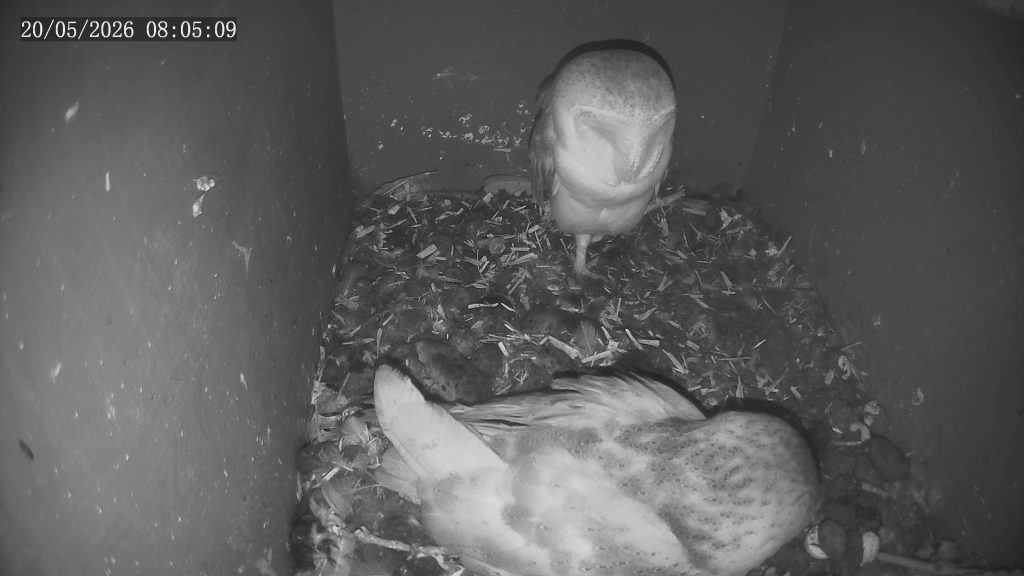
This morning we can see a broken eggshell near the female.
It will be a matter of luck when we see the chick itself as she will brood it closely.
If all the eggs hatch we should have a full brood by the middle of next week.
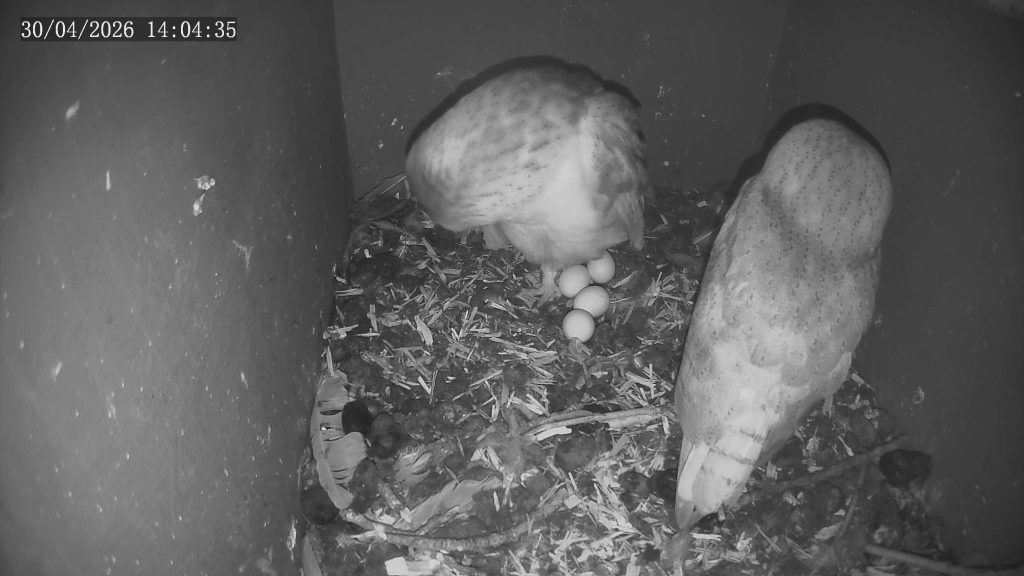
Today we briefly saw the fourth egg.
It was laid last Friday.
The female barn owl will do all the incubating and we can expect the first chick to hatch in the third week of May if all goes well.
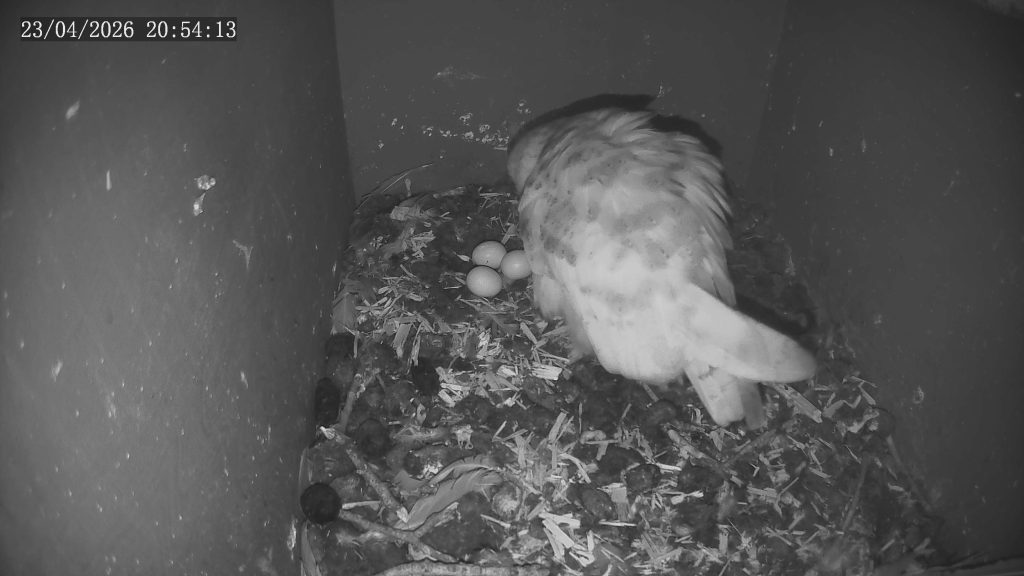
Tonight the female barn owl lifted off the nest to reveal three eggs. The third would have been laid on Tuesday evening.
The fourth egg should be here by Friday lunchtime.
The male provides all the food for his mate during incubation. Viewers will notice he disappears for long periods at night. The settled weather this week will help him to hunt.
To view the Owl Blog before 2022, visit the archive here.

Providing Grants for the benefit of Bourne.
Len Pick Trust, 5 Granby Court, Bourne, Lincs PE10 9AD Tel: (01778) 218090
Registered Charity No. 1106598 The Len Pick Trust © 2025
Website built by MK Web - Web Design in Bourne & Stamford